
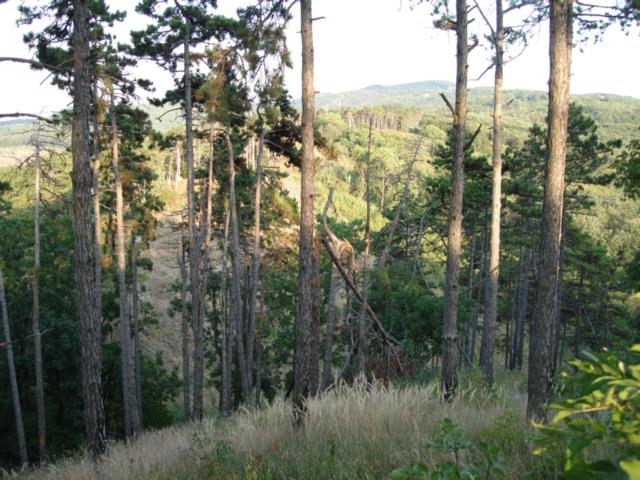
Aynard’s Castle
Looking towards the Buda Hills one of the defining landscape elements – apart from Meszes-hegy (Limestone Hill) – is the double peak of Zajnát on the edge of the mountains.
The names of surrounding settlements still used today “in the vernacular” – such as Hajnál and Ajnát – are also indications that the castle of the Aynard clan once stood on this hill.
This is corroborated by archive relics and research findings. The venue is strategically ideal; the important routes of the Buda/Esztergom/Fehérvár triangle can be monitored from here; and there is a good view of the Pilis and Zsámbék Basin and the Gerecse mountain range.
The Aynard clan came to the country in the second half of the 12th century as part of the retinue to the wife of King Béla III, who had French ancestry. They owned significant estates in the area of Perbál and Zsámbék. Among other things they were responsible for building the Prémontré monastery in Zsámbék (Church Ruins).
Initially the castle was probably just a hill fort or fortress, but it was expanded to include stone walls and stone tower houses as a result of the Tatar attacks. The Aynards and their descendants played an important role in the 13th century, but their significance declined in the following century.
Alongside the clan’s decline the castle also lost some of its significance, and by the beginning of the 15th century it was abandoned and therefore slowly fell into disrepair. However, its memory lived on in oral tradition for centuries, and it is still cultivated today.
AYNARD’S CASTLE
Similar results
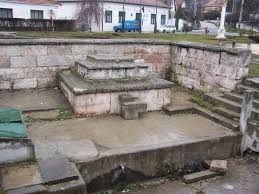
Turkish well
2072 Zsámbék, Benedek u. 2.After the fall of Buda, Zsámbék fell into Turkish hands and then the well with an integrated channel was built for an abundant...
More
Statue of St. John of Nepomuk
2091 Etyek, Boti út 3.St. John of Nepomuk statue was erected around 1750 Imre Plájes. It moved to its present location on the occasion of the...
More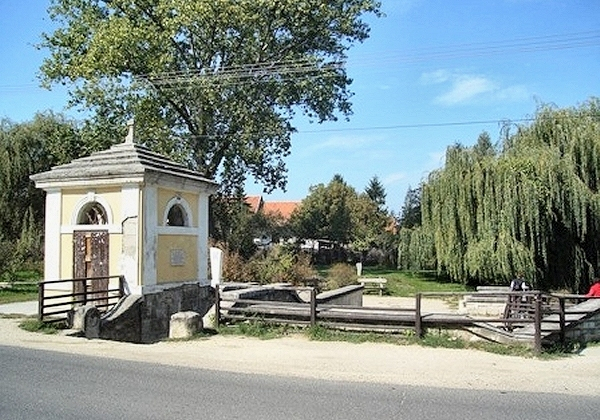
FOUNTAIN OF HUNGARY
2091 Etyek, Fő térThe well is located in the nineteenth century. Originally was built in neoclassical style.
More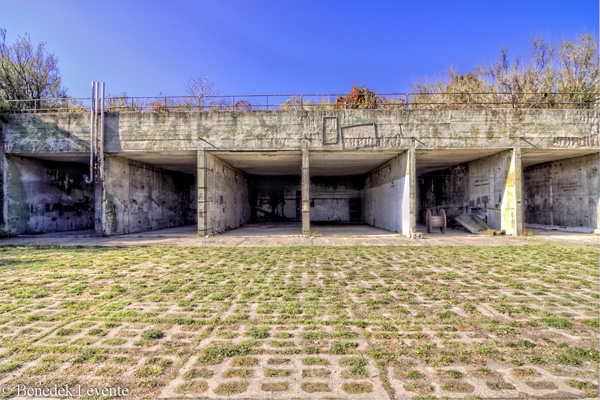
Missile base monument
2072 Zsámbék külterület Őrsi-hegyIn the 1970s, during the Cold War, the object now regarded as a tourist sight was built as one of 12 ground-to-air defense...
More